
Advanced Regenerative Aesthetics
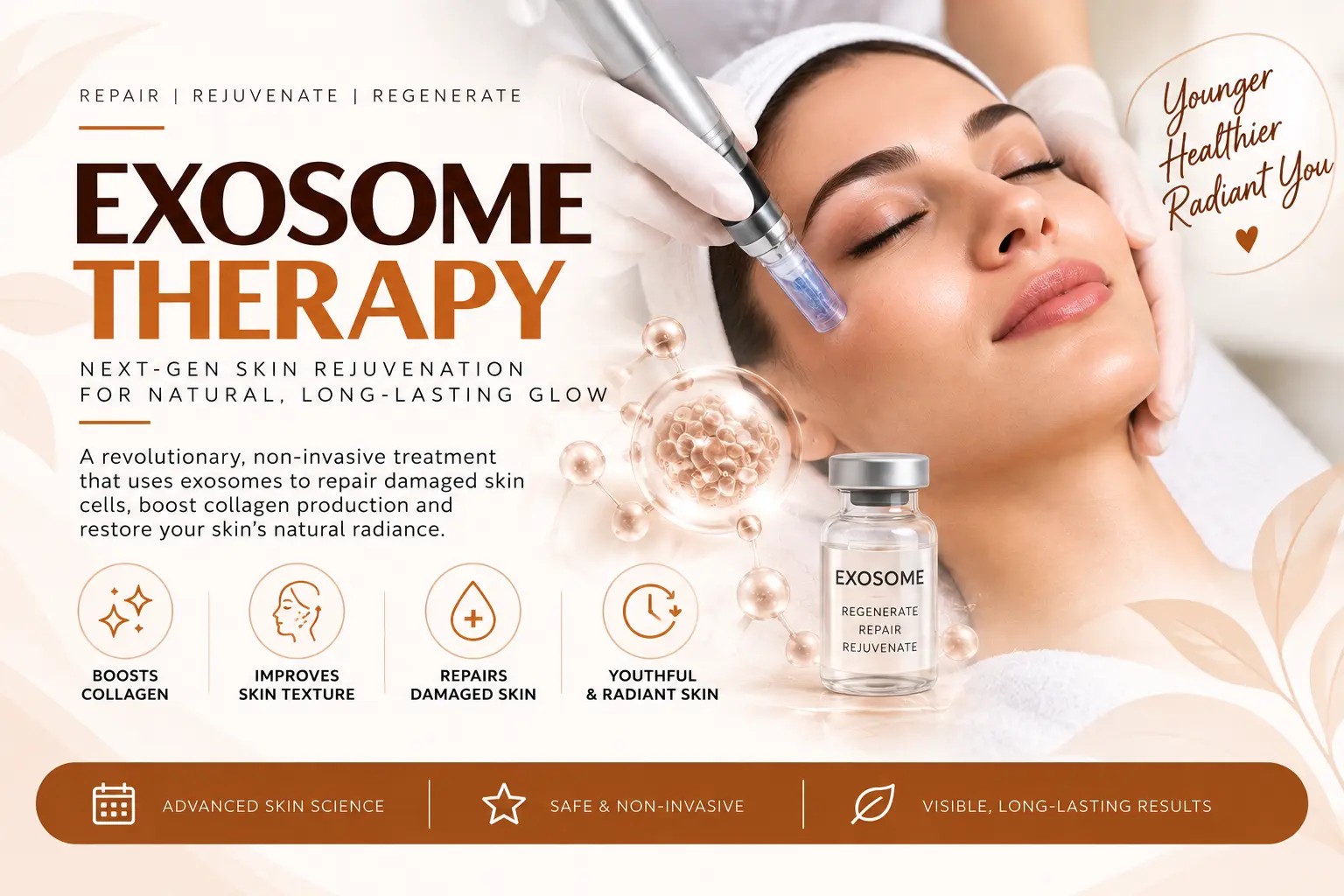
EXOSOME THERAPY
“Give your skin time
to renew. Let the results unfold naturally.”
Nurim goal for Exosome therapy is beautifully simple –
to restore radiance, refine texture and reveal skin that looks naturally revitalized.
Exosome Therapy represents an emerging frontier in regenerative aesthetics, inspired by the science of cell-to-cell communication. Exosomes are microscopic extracellular vesicles that carry bioactive signalling components involved in cellular communication and can contains proteins, lipids and nucleic-acid-related molecules. At Nurim protocol, this innovative technology is used to support the skin’s natural renewal and recovery environment – helping create the appearance of smoother texture, enhanced luminosity, improved firmness and revitalized skin quality.
How Exosome therapy Works?
Exosome therapy focuses on communication pathways that influence skin behaviour, not just the skin’s surface. This therapy signalling components are intended to interact with the skin’s cellular environment and support pathways associated with renewal, recovery and skin quality. At nurim, we combine this emerging science with personalized protocols for refined skin rejuvenation.
TREATMENT PROCEDURE OF EXOSOME THERAPY:
Every exosome therapy protocol at Nurim dermatech is tailored to the individual – because sophisticated aesthetics begins with understanding your skin. A carefully curated protocol designed to deliver advanced skin rejuvenation with precision and personalized care.
Step 1: Skin Assessment – Your treatment begins with a detailed consultation and skin assessment. Your skin condition, concerns and aesthetic goals are evaluated to determine the most appropriate exosome-based protocol.
Step 2: Skin Preparation- The skin is thoroughly cleansed and prepared under appropriate clinical conditions. A topical numbing cream may be applied when required, depending on the treatment technique being used.
Step 3: Professional Application – The selected exosome formulation is introduced into the skin using the chosen professional technique. Depending on your personalized protocol, this may include microneedling or another suitable aesthetic procedure.
Step 4: Post-Treatment Soothing- A calming, professional post-treatment protocol is applied to support skin comfort and recovery. Your practitioner will provide personalized aftercare instructions based on the procedure performed.
Step 5: Recovery & Rejuvenation – As the skin naturally recovers, the treatment is designed to support its renewal process and overall skin quality. Visible improvements in radiance, texture, smoothness and firmness may develop progressively.
What happens after the Exosome therapy treatment?
Treatment response and recovery vary depending on the exosome product, application technique and any procedure performed alongside it. Follow your clinician’s individualized aftercare instructions-
- Immediately after treatment: Mild redness, warmth, sensitivity or tightness may occur, particularly when exosomes are combined with microneedling or another skin-renewal procedure.
- Over the next few days: The skin gradually settles. Mild dryness, sensitivity or light flaking may occur as part of the recovery process.
- During the following weeks: As the skin recovers, it may begin to appear fresher, smoother, more hydrated & luminous. Improvements in texture and overall skin quality may develop progressively.
- With continued care: Results vary from person to person. Your expert professional recommends a personalized treatment protocol based on your skin’s response and aesthetic goals.
Benefits of Exosomes therapy-
The effects of exosome therapy can vary considerably depending on the source and formulation of the exosomes, product quality, method of application, treatment protocol and individual patient factors. Depending on the specific product, delivery method and clinical protocol, potential aesthetic benefits may include:
- Helps revive dull, fatigued-looking skin for a fresher and more even-looking skin surface
- Support to improve the skin appearance, hydration and overall skin quality
- Helps support skin that appears firmer, more resilient and youthful
- Helps to improve the visible appearance of fine lines and early visible signs of aging
- Supports the skin’s natural appearance, vitality and smoothness of the complexion
- Helpful in supporting tissue-repair and recovery pathways
- Improvement in visible appearance of texture, tone and radiance
Possible adverse effects-
At nurim, treatment suitability, product selection and application technique are assessed individually. Our expert clinician will explain the expected recovery, potential risks and appropriate aftercare before treatment.
Basically, Exosome-based treatments are generally designed to be well tolerated, but the type and intensity of side effects depend on the product used and the method of application. When exosomes are delivered with procedures such as microneedling, some effects may result from the procedure itself rather than the exosome product.
COMMON, TEMPORARY EFFECTS-
- Mild redness or flushing
- Temporary swelling or puffiness
- Warmth or mild burning sensation
- Skin sensitivity or tenderness
- Tightness or dryness
- Mild itching
- Temporary peeling or flaking
- Small pinpoint marks following microneedling
These effects typically settle as the skin recovers.
LESS COMMON RISKS-
- Prolonged irritation or inflammation
- Contact or allergic-type reactions
- Infection, particularly if appropriate sterile technique is not maintained
- Post-inflammatory hyperpigmentation or hypopigmentation
- Prolonged swelling or sensitivity
- Rare scarring or other procedure-related complications
Note: Seek prompt medical advice if you develop increasing pain, significant swelling, spreading redness, pus or discharge, fever, blistering, marked skin discoloration, or symptoms that are worsening rather than improving.
Contraindications-
At nurim, the specific product, treatment technique, medical history and individual risk factors are reviewed before proceeding because exosome therapy is not suitable for everyone. A thorough medical and skin assessment is performed before treatment to determine suitability and minimize potential risks.
Treatment should generally be avoided or deferred in cases of:
- Active skin infection or inflammation at the proposed treatment site
- Open wounds, active dermatitis or significant skin irritation in the treatment area
- Known hypersensitivity or allergy to any component of the specific product
- Active systemic infection or fever
- Pregnancy or breastfeeding, where treatment is not medically indicated and safety data are insufficient
- Active or recently treated skin malignancy at the treatment site, unless specifically cleared by the treating specialist
- Significant uncontrolled medical conditions that may impair healing or increase procedural risk
- Recent procedures or treatments that have not yet allowed adequate skin recovery
MEDICAL REVIEW MAY BE REQUIRED –
Additional assessment may be necessary for patients with:
- A history of abnormal or keloid scarring
- Bleeding or clotting disorders
- Immunosuppression or significant immune disorders
- Conditions or medications that may impair wound healing
- Previous severe reactions to injectable or topical aesthetic products
- Active or recently treated herpes simplex in the treatment area
- Use of medications that may increase bleeding or bruising
Frequently asked Questions-
1. What are Exosomes?
Exosomes are microscopic extracellular vesicles involved in cell-to-cell communication and contain various bioactive signalling components.
2. What does Exosome therapy do?
It is designed to support skin renewal, recovery, radiance and overall skin quality.
3. Which skin concerns can it help with?
It may help to improve the appearance of fine lines, uneven texture, dullness and loss of firmness.
4. Is there any downtime?
Mild redness, sensitivity, swelling or dryness may occur temporarily, depending on the procedures.
5. How many sessions are needed?
The number of sessions is individualized based on your skin condition and treatment goals.
6. Can exosomes be combined with other treatments?
Yes, they may be incorporated into selected treatments such as microneedling, when clinically appropriate.
7. What should I do after treatment?
Follow your clinician’s aftercare instructions, including gentle skincare and appropriate sun protection.
8. Is Exosomes better than PRP?
Thay are different approaches with different biological sources and evidence bases. Your clinician can recommend the most appropriate option for your goals.
9. Can exosomes therapy be combined with laser treatments?
Potentially, depending on the laser, treatment intensity and skin condition. Timing and suitability should be determined by your clinician.
10. Can Exosomes be used around the eyes?
Selected protocols may be designed for delicate areas, but specific product and treatment suitability must be assessed by a qualified professional.
11. Can men undergo Exosome therapy?
Yes. Exosome-based aesthetic treatments may be considered for both men and women, subject to individual assessment.
12. Is consultation necessary before treatment?
Yes. A consultation helps determine product suitability, treatment technique, potential risks and realistic expectations.