
Advanced Skin Rejuvenation
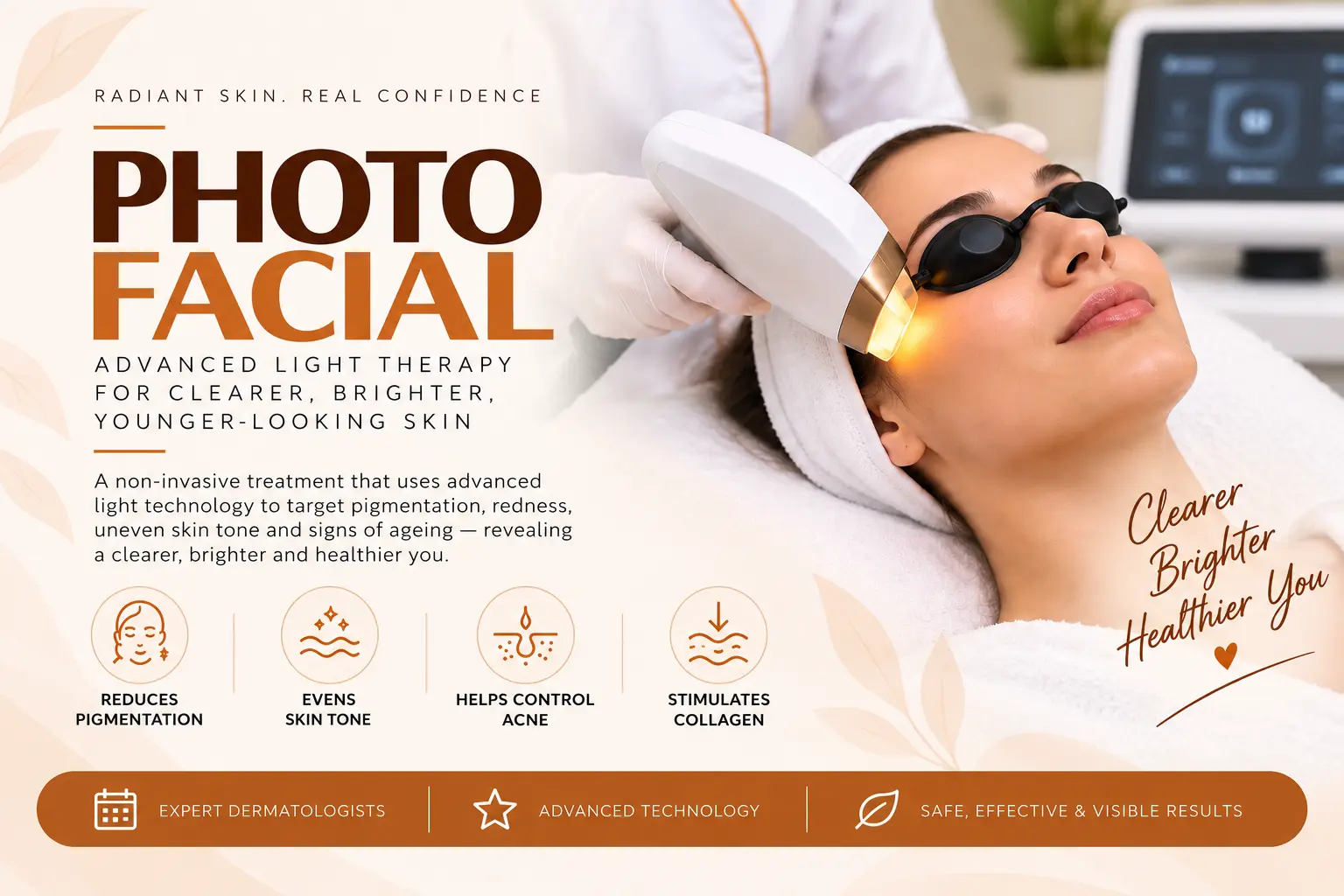
PHOTOFACIAL
Photofacial is a precision-driven skin rejuvenation treatment designed to restore the skin’s clarity, luminosity and refined appearance. At Nurim, each photofacial is thoughtfully personalized to your skin’s complexion, allowing controlled light energy to address specific aesthetic goals such as pigmentation, sun-induced discoloration, redness and uneven skin complexion, helping restore greater uniformity and luminosity to the skin. Photofacial supports a more balanced -looking complexion while encouraging the skin’s natural rejuvenation process.
Treatment procedure –
Every Photofacial experience begins with a detailed skin assessment to understand your complexion, concerns and desired outcome.
Nurim follows the following step at time of treatment procedure:
01
1. Skin Consultation & Assessment: A detailed skin analysis is performed to understand your skin type, concerns and desired aesthetic outcome.
02
2. Skin Preparation: The skin is thoroughly cleansed and prepared to ensure optimal contact and treatment precision.
03
3. Eye Protection: Protective eyewear is placed to ensure comfort and safety throughout the light-based procedure.
04
4. Precision Light Treatment: Precisely calibrated light pulses are systematically delivered to the targeted areas. The energy is customised to address concerns such as pigmentation, diffuse redness, uneven skin tone and photodamage.
05
5. Soothing & Skin Recovery: A calming, restorative skincare protocol is applied to comfort the skin and support the recovery process.
06
6. Post-treatment Care: Personalized aftercare guidance is provided, including essential sun protection and skincare recommendations to maintain and enhance your results.
Recommended treatment plan-
Photofacial is performed through a clinician-led, personalised treatment protocol, with the number and frequency of sessions determined by the individual’s skin condition, treatment objectives and clinical response.
v Initial skin renewal: Begin with a series of treatment, a detailed skin evaluation is performed to determine appropriate protocol and treatment parameters.
v Treatment interval: 3 -6 sessions, typically scheduled at 3 -4 weeks intervals, may be recommended depending on the skin concern and desired outcome.
v Clinical review: Skin response is evaluated throughout the treatment course. Treatment parameters may be adjusted where clinically appropriate to optimise results while maintaining skin safety.
v Maintenance Phase: Once the desired improvement has been achieved, periodic maintenance treatments may be recommended based on individual skin behaviour, lifestyle and ongoing exposure to environmental factors.
Benefits of Photo facial -
Following are the benefits of Photo facial Aesthetic Facial as follows:
Ø
Improves the appearance of pigmentation and sun-induced discoloration
Ø
Promotes a more even skin tone and refined complexion
Ø
Reduce the appearance of facial redness and vascular irregularities
Ø
Enhances overall skin luminosity for a brighter, healthier-looking complexion
Ø
Helps to refine the appearance of uneven skin texture
Ø
Supports collagen renewal and skin rejuvenation
Ø
Improves the appearance of photodamaged skin
Ø
Creates a smoother, clearer and more refined complexion
Possible adverse effects-
Adverse effect by Photofacial vary depending on skin type, treatment parameters and individual sensitivity like as:
·
Temporary redness and warmth
·
Mild swelling or sensitivity
·
Temporary dryness or tightness
·
Darkening of pigmentation before gradual fading
·
Mild peeling or flaking
·
Temporary changes in skin pigmentation
·
Increased sensitivity to sunlight
·
Rare blistering or superficial burns
·
Rare risk of scarring or persistent pigmentation changes
Contraindications-
Photofacial may not be suitable in certain skin or medical conditions. A thorough consultation is recommended before treatment to assess suitability and minimise potential risks.
§
Active skin infection, herpes outbreak or open lesions in the treatment area
§
Active eczema, dermatitis or significant skin inflammation
§
Recent sunburn, tanning or significant UV exposure
§
Use of tanning beds or self-tanning products close to treatment
§
Known photosensitivity or light-induced skin disorders
§
Use of photosensitizing medications or systemic treatments
§
Certain topical medications or active skincare ingredients that increase photosensitivity
§
Recent chemical peel, laser resurfacing or other energy-based treatment
§
Recent waxing or procedures causing skin irritation in the treatment area
§
History of photosensitive reactions
§
Certain pigmentary disorders requiring specialist assessment
§
Active or poorly controlled medical conditions affecting wound healing
§
Pregnancy or breastfeeding, where treatment may be deferred as a precaution
Frequently asked Questions (FAQs)-
01
What is Photofacial?
Photofacial is a light-based skin treatment designed to improve pigmentation, redness, uneven skin tone and overall skin radiance.
02
Is Photofacial painful?
Usually minimal discomfort, with a brief warmth or snapping sensation.
03
How long does a session take?
Typically 30 – 45 minutes, depending on the treatment area.
04
How many sessions are needed?
Usually 3 – 6 sessions, depending on individual skin concerns.
05
Is there any downtime?
Minimal downtime; mild redness or warmth may occur temporarily.
06
When will you see results?
Some improvements may appear after the first session, with progressive results over a treatment course.
07
Can Photofacial treat pigmentation?
Yes. It can help improve the appearance of selected pigmentation concerns.
08
Is Photofacial suitable for all skin types?
Suitability depends on individual skin type, condition and clinical assessment.
09
Can it improve redness?
Yes, certain types of facial redness may respond well to treatment.
10
Can Photofacial treat the neck?
Yes, when clinically appropriate.
11
Can you wear makeup after the treatment?
Usually, once the skin has settled, as advised by your clinician.
12
Is a consultation required before Photofacial?
Yes, a professional assessment is recommended before treatment.
13
How long do results last?
Results vary; maintenance and consistent sun protection help prolong them.
14
Is Photofacial the same as a laser treatment?
No. Photofacial typically uses broad-spectrum or filtered light energy, whereas laser treatments use a specific wavelength of concentrated light.