AESTHETIC FACIAL
PRP FOR FACELIFT & REJUVENATION
PRP Facelift & Rejuvenation at NURIM Dermatech is a personalized regenerative aesthetic treatment designed to support skin renewal, improve skin texture and promote a naturally refreshed appearance.
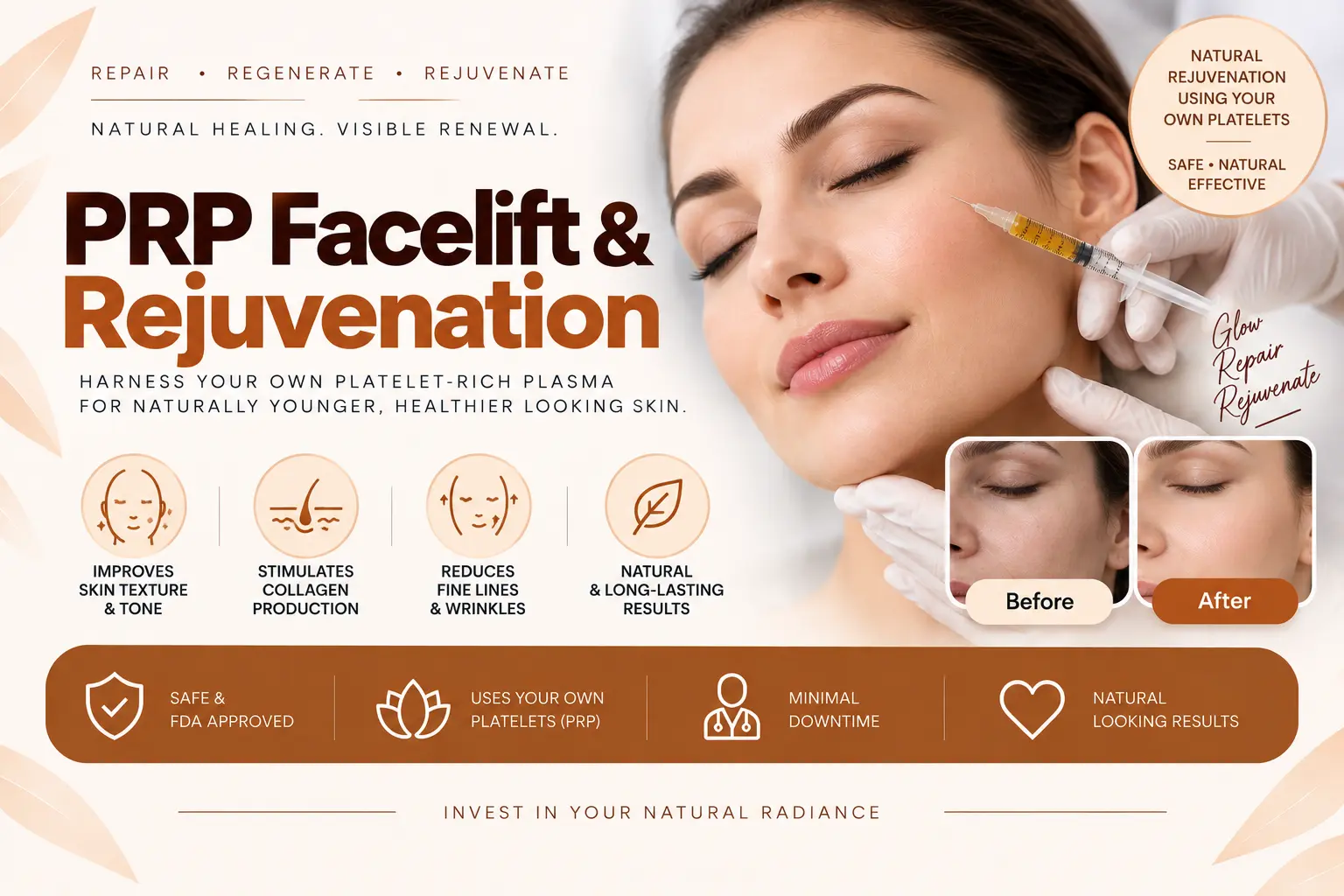
Ageing is not simply about the appearance of lines. Over time, the skin gradually loses collagen, elasticity, hydration and its natural ability to renew itself. The result can be a complexion that appears tired, less defined and lacking its youthful luminosity. At nurim, PRP Facelift & Facial Rejuvenation is designed to restore the skin’s natural vitality through the regenerative potential of your own blood-derived growth factors.
PRP Facelift, an advanced aesthetic treatment is a non-surgical approach to enhancing skin quality, firmness and radiance. Every face has its own architecture, expression and character. Our PRP rejuvenation protocols are therefore carefully customised according to your skin quality, facial contours and aesthetic goals.
From fine lines and early laxity to dullness and loss of elasticity, nurim approach focuses on skin regeneration rather than simply concealing imperfections.
What PRP rejuvenation Can Help Improve?
It helps to improves –
Fine lines and early signs of ageing
Dull, tired-looking skin
Loss of skin firmness and elasticity
Uneven skin texture
Reduced facial radiance
Mild skin laxity
Acne scars and superficial textural irregularities
Overall skin quality and rejuvenation
Why Choose PRP Facelift?
Due to the following circumstances –
100% autologous approach – PRP is derived from your own blood, making it a personalised regenerative treatment.
Natural-looking rejuvenation – The objective is refreshed, healthy-looking skin rather than an overfilled or altered appearance
Collagen-focused regeneration – Growth factors released from platelets may support collagen formation and tissue repair processes.
Minimal downtime – Most patients can return to their routine relatively quickly, although temporary redness, swelling or bruising may occur.
TREATMENT PROCEDURE OF PRP FACELIFT:
PRP Facelift begins with a personalised skin and facial assessment, followed in nurim aesthetic clinic for a naturally refreshed, firmer and more luminous appearance, with gradual improvement in overall skin quality – without changing your unique facial identity.
Step 1: Consultation & Skin Assessment –
Your facial structure, skin quality, concerns and rejuvenation goals are carefully assessed to create a personalised PRP treatment plan.
Step 2: Blood Collection -
A small amount of your own blood is gently collected under sterile conditions as the source for your personalised PRP.
Step 3: PRP Preparation –
The sample is carefully processed to separate and concentrate the platelet-rich plasma, rich in naturally occurring growth factors.
Step 4: Precision administration –
The prepared PRP is strategically injected into selected facial areas using a precise technique tailored to your skin and aesthetic needs.
Step 5: Regenerative Rejuvenation –
The growth factors support the skin’s natural repair and renewal processes, helping promote collagen remodelling and improved skin quality over time.
Step 6: Aftercare & Follow-Up –
Personalised aftercare guidance is provided, with follow-up assessment to monitor your skin’s progressive rejuvenation and determine whether further sessions may be beneficial.
BENEFITS OF PRP FACELIFT:
PRP Facelift is a regenerative approach to facial rejuvenation that uses your own platelet-rich plasma to support natural skin renewal and collagen remodelling. PRP Facelift beneficial for an individual who –
Helps improve skin firmness and elasticity
Promotes a fresher, healthier-looking glow
Helps refine uneven texture and superficial imperfections
May reduce the appearance of early signs of ageing
Supports smoother, more supple and revitalised-looking skin
Enhances your appearance without adding facial volume or changing your expressions
Generally, involves limited recovery compared with surgical facelift procedures.
ADVERSE EFFECTS FOR PRP FACELIFT:
PRP Facelift is generally well tolerated when performed by a qualified medical professional. As with any injectable procedure, temporary local reactions may occur –
Mild redness or warmth
Swelling or puffiness
Tenderness or sensitivity
Minor bruising or pinpoint bleeding
Temporary itching or tightness
Mild discomfort at injection sites
Rarely, infection or prolonged inflammation
These effects are usually temporary and resolve naturally. Our clinician will provide personalised aftercare instructions to support a safe recovery.
CONTRAINDICATIONS OF PRP FACELIFT:
PRP Facelift may not be suitable for everyone. Treatment should be avoided or postponed in certain circumstances, including:
Active skin infection, inflammation or open wounds at the treatment site
Significant blood or platelet disorders
Certain bleeding or clotting disorders
Use of medications that may significantly affect bleeding or platelet function
Severe anaemia or inadequate platelet count
Active systemic infection or significant illness
Certain uncontrolled chronic medical conditions
Pregnancy or breastfeeding, where treatment may be deferred as a precaution
Known allergy or sensitivity to products used during the procedure
FAQs:
1. What is PRP Facelift?
A non-surgical invasive treatment using your own platelet-rich plasma to support skin regeneration and rejuvenation.
2. Is it a surgical facelift?
No. It improves the skin quality rather than providing the lifting effect of surgery.
3. How many sessions are needed?
Typically, a personalised course is recommended based on your skin and aesthetic goals.
4. How long do results last?
Longevity varies by an individual, skin condition and lifestyle; maintenance may be advised.
5. Is PRP safe?
Generally, well tolerated when performed by a qualified medical professional.
6. Can PRP improve facial firmness?
It may support collagen remodelling, helping improve skin firmness and elasticity.
7. Can PRP Improve dull skin?
PRP can support skin renewal and may enhance a brighter, healthier-looking complexion.
8. Can PRP be used around the eyes?
Yes, selected under-eye areas may be treated by an appropriately qualified practitioner when clinically suitable.
9. Can PRP prevent ageing?
PRP cannot stop ageing, but it may support skin quality and help address certain visible signs of ageing.
10. How long does a PRP Facelift session take?
Usually around 45 – 60 minutes, depending on the treatment area.
11. Can PRP improve skin elasticity?
It may support collagen remodelling and improve the appearance of skin elasticity.
12. Can PRP treat the neck?
Yes, the neck can be considered for rejuvenation when clinically appropriate.
13. Can PRP be used for hands?
PRP can be used for skin rejuvenation of the hands in selected patients.
14. Can PRP help with pigmentation?
PRP may complement selected pigmentation treatments, but it is not primarily a pigmentation treatment.