

Have you ever looked in the mirror after a good night’s sleep and still felt that your eyes looked tired?
The skin around the eyes is one of the first areas where fine lines, dullness, uneven texture and signs of fatigue can become noticeable. Because the skin in this area is delicate and thinner than much of the face, it often needs a more carefully planned approach than a regular facial treatment.
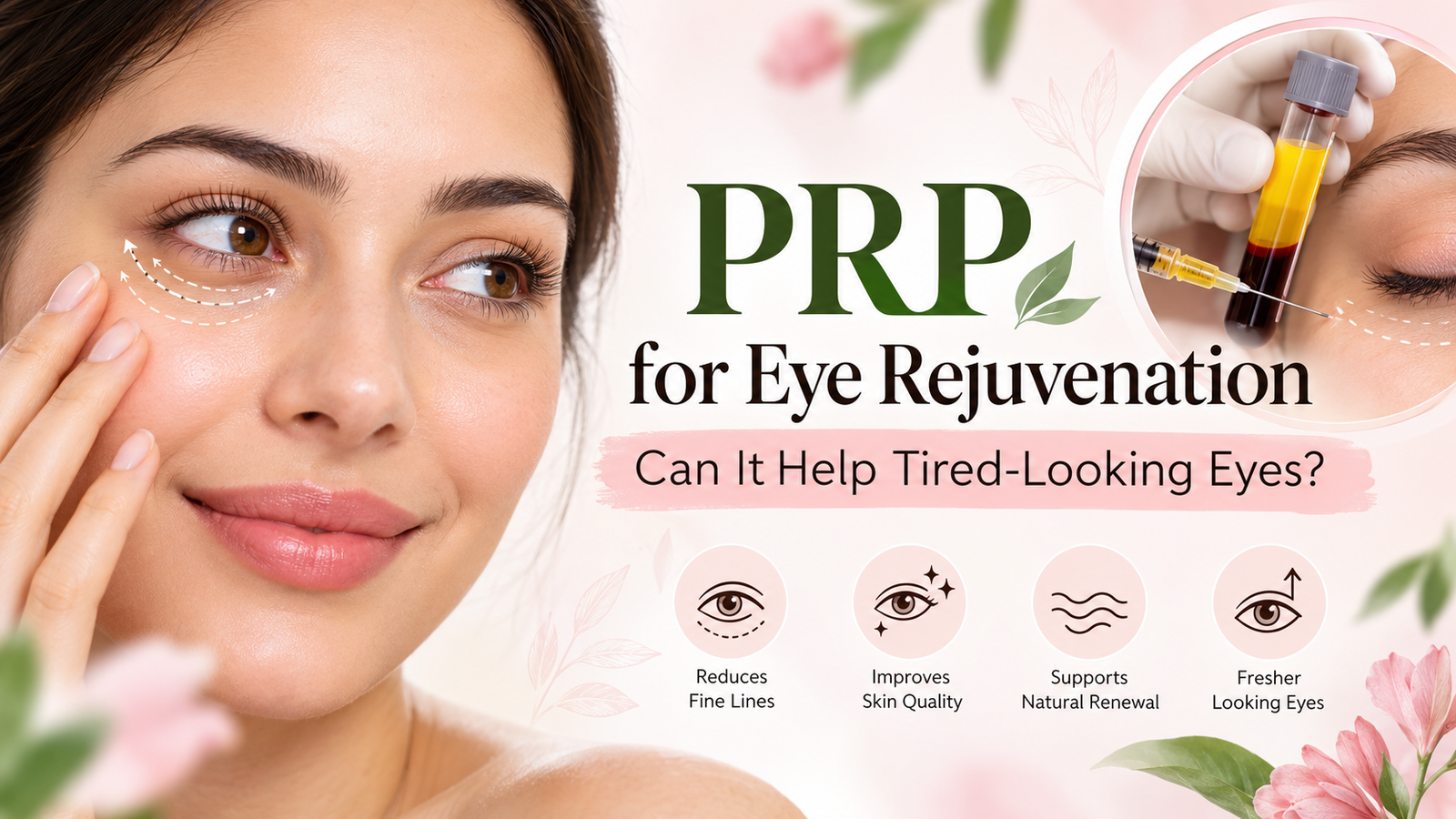
PRP for eye rejuvenation is one treatment that has gained attention for this reason. It uses platelet-rich plasma prepared from your own blood and is designed to support the skin’s natural regenerative processes.
At NURIM Dermatech in Preet Vihar, Delhi, PRP eye rejuvenation is approached as a personalised treatment rather than a one-size-fits-all procedure. The aim is to improve the overall quality and appearance of the under-eye area while keeping the result natural-looking.
What Is PRP Eye Rejuvenation?
PRP stands for Platelet-Rich Plasma.
In simple terms, a small amount of your blood is collected and processed to separate the platelet-rich plasma. This plasma contains naturally occurring growth factors that are involved in the body’s repair and regenerative processes.
During a PRP eye rejuvenation treatment, the prepared PRP is carefully introduced into selected areas around the eyes using a technique chosen according to the individual’s skin condition and anatomy.
Unlike a treatment designed to add significant volume, PRP focuses more on skin quality and regeneration.
This is why it may be considered by people who want their eyes to look fresher and healthier without changing their facial expression or overall appearance.
Why Does the Under-Eye Area Need Special Care?
The skin around your eyes is different from the skin on other parts of your face.
It is thinner, delicate and surrounded by important anatomical structures. Fine lines, pigmentation, visible blood vessels, mild skin laxity and changes in volume can all contribute to a tired-looking appearance.
And importantly, not every dark circle or under-eye concern has the same cause.
For example, someone may have pigmentation, while another person may have hollowness or visible vascularity. Someone else may mainly have very thin or crepey-looking skin.
That is why identifying the underlying concern is an important part of planning any under-eye treatment.
What Can PRP Eye Rejuvenation Help With?
PRP isn’t a magic solution for every under-eye concern, but it may be useful for selected patients looking to improve the quality and appearance of the delicate skin around the eyes.
Depending on the individual, PRP may help support:
- The appearance of fine lines
- Thin or delicate-looking under-eye skin
- Uneven skin texture
- Mild loss of firmness
- Dull or tired-looking skin
- Overall skin radiance
- The appearance of early signs of ageing
The response can vary from person to person, so realistic expectations are important.
How Does PRP Eye Rejuvenation Work?
One of the interesting aspects of PRP is that the material used for treatment comes from your own blood.
The general process involves several steps.
1. Consultation and Assessment
The first step is understanding what is actually making the eye area look tired.
The clinician may assess skin texture, fine lines, pigmentation, laxity, hollowness and the overall anatomy of the area. Your medical history and expectations are also considered.
2. Blood Collection
A small amount of blood is collected using a sterile technique.
3. PRP Preparation
The blood sample is processed to separate the platelet-rich plasma from the other blood components.
4. Precision Treatment
The prepared PRP is then carefully introduced into selected areas around the eyes using a technique appropriate for the individual’s anatomy and skin condition.
Because the periocular area is delicate, precision is particularly important.
5. Post-Treatment Care
After the procedure, you receive personalised aftercare instructions.
Some people may experience temporary redness, swelling, tenderness or bruising following treatment. These reactions generally settle as the area recovers, although the duration can vary.
6. Gradual Skin Renewal
PRP isn’t intended to produce an instant dramatic transformation.
The idea is to support the skin’s natural regenerative environment, meaning any improvement in skin quality may develop gradually over time.
Is PRP Good for Dark Circles?
This is one of the most common questions people ask.
The answer depends on why you have dark circles.
Dark circles can have different contributing factors, including pigmentation, vascular visibility, skin thickness, shadows caused by facial anatomy and under-eye hollowness.
PRP may help improve skin quality in selected cases, but it should not be considered a universal treatment for every type of dark circle.
During a consultation, the underlying concern can be assessed before deciding whether PRP is appropriate.
PRP vs Other Under-Eye Treatments
There isn’t one treatment that is right for everyone.
Depending on the concern, different approaches may be considered.
PRP Eye Rejuvenation
PRP focuses on supporting skin quality and natural regenerative processes using platelet-rich plasma derived from your own blood.
Tear Trough Filler
When under-eye hollowness is the primary concern, a carefully selected filler treatment may sometimes be considered. It is a different approach from PRP because fillers are designed to provide structural volume.
You can learn more about Tear Trough Filler at NURIM Dermatech.
Under-Eye Microneedling
Microneedling uses controlled micro-injury to stimulate the skin’s natural healing response and may be considered for certain concerns involving texture, fine lines and skin quality.
Read more about Under-Eye Microneedling in Preet Vihar.
Eye Exosome Treatment
Eye exosome treatments are another approach to under-eye skin rejuvenation and are designed to support skin quality and a refreshed appearance.
You can explore Eye Exosome Treatment at NURIM Dermatech to understand how this approach differs.
The right option depends on the actual cause of the concern, skin condition and treatment goals.
What Happens After PRP Eye Rejuvenation?
It is normal to experience some temporary changes immediately after treatment.
These can include:
- Mild redness
- Swelling or puffiness
- Tenderness
- Small bruises
- Mild sensitivity
- Temporary tightness
The under-eye area can look slightly swollen for a short period because it is particularly delicate.
Your clinician will provide individual aftercare instructions based on your treatment.
It is also important to remember that PRP is not designed to give an immediate facelift-like result. Improvements, when they occur, are generally gradual.
How Many PRP Sessions Are Needed?
There is no single number of sessions that is appropriate for everyone.
The recommended treatment plan can depend on:
- Your age
- Skin quality
- The condition of the under-eye area
- Your aesthetic goals
- How your skin responds to treatment
- Whether other treatments are being considered
A consultation is therefore more useful than choosing a fixed number of sessions in advance.
Is PRP Eye Rejuvenation Safe?
PRP uses platelet-rich plasma prepared from your own blood, but that does not mean the procedure is automatically suitable for everyone.
A proper medical assessment is important before treatment.
PRP may not be appropriate in certain situations, including some blood or platelet disorders, active infection or inflammation around the treatment area and certain uncontrolled medical conditions.
If you have an active eye infection or significant inflammation around the eyes, treatment should generally be postponed until the condition has been appropriately managed.
Why Choose a Personalised Approach?
The goal of under-eye rejuvenation should not simply be to make the area look different.
The eyes are an important part of facial expression. Over-treatment can sometimes make a person’s appearance look unnatural.
At NURIM Dermatech, the approach to PRP eye rejuvenation focuses on assessing the individual concern and creating a treatment plan around the patient’s anatomy, skin quality and expectations.
The objective is subtle improvement — helping the eye area appear fresher and more rejuvenated while preserving your natural appearance.
Can PRP Be Combined With Other Treatments?
Sometimes, different treatments may be used as part of a personalised eye-rejuvenation plan.
For example, a person whose main concern is skin texture may be considered for one approach, while someone with significant structural hollowness may require a different treatment strategy.
NURIM Dermatech also offers other eye-focused treatments such as BeautyTek Eyes, Eye Exosomes, Under-Eye Microneedling and Tear Trough Filler.
The important point is that combining treatments should be based on professional assessment rather than simply choosing more procedures.
PRP Eye Rejuvenation in Preet Vihar, Delhi
If your eyes look tired even when you feel well-rested, it may be worth understanding what is actually contributing to the appearance.
PRP eye rejuvenation can be considered for selected patients who want to improve the quality and appearance of delicate under-eye skin through a regenerative approach.
At NURIM Dermatech, Preet Vihar, Delhi, treatment begins with an individual assessment so that your concerns, expectations and suitability can be discussed before proceeding.
Clinic Address: C-50, Vikas Marg, near Metro Pillar No. 85, C Block, Preet Vihar, Delhi – 110092
Call / WhatsApp: +91 8796544166
Opening Hours: Monday – Sunday, 10 AM – 8 PM
Frequently Asked Questions
Is PRP eye rejuvenation the same as a filler?
No. PRP and dermal fillers work differently. PRP is intended to support skin regeneration and quality, while fillers are primarily used to provide volume and structural correction.
Does PRP completely remove dark circles?
Not necessarily. Dark circles have different causes, and PRP may not address every type of pigmentation, vascular shadow or structural hollowing.
Is PRP around the eyes painful?
Some discomfort can occur during the procedure. A topical anaesthetic may be used when clinically appropriate to improve comfort.
How long does a PRP eye rejuvenation session take?
A treatment may typically take around 30–60 minutes, depending on the individual treatment protocol.
Is there any downtime?
Temporary redness, swelling, tenderness or bruising can occur. Recovery varies from person to person.
When will I see results?
PRP is intended to support gradual skin renewal rather than create an immediate transformation. Improvements may develop progressively.
Can men have PRP eye rejuvenation?
Yes. PRP eye rejuvenation can be considered for appropriately selected patients regardless of gender.
Can PRP make my under-eyes look fuller?
PRP is not primarily a volumising treatment, so it should not be expected to create the same structural volume as a dermal filler.
Final Thoughts
The area around your eyes can say a lot about how refreshed you look — but improving it doesn’t necessarily mean changing the way you look.
PRP eye rejuvenation takes a regenerative approach, using your own platelet-rich plasma to support the skin’s natural renewal processes. For the right candidate, it may help improve the appearance of fine lines, texture, firmness and tired-looking under-eye skin.
The most important step is understanding what is causing your particular under-eye concern before choosing a treatment.
If you’re considering PRP for eye rejuvenation in Preet Vihar, a professional consultation at NURIM Dermatech can help you understand whether PRP is appropriate for your skin and what other options may be available.